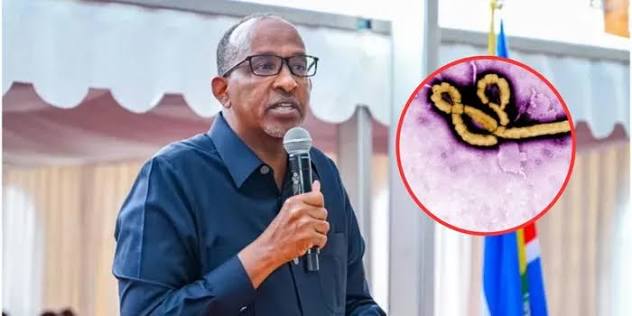
Kenya has recorded another confirmed case of Ebola, pushing the total number of cases in the country to eight.
Health Director General Patrick Amoth confirmed the latest case on Sunday, saying laboratory tests conducted on 38 people identified one additional infection involving the Bundibugyo strain of Ebola.
The newly confirmed patient is a 49-year-old man who worked as a patient attendant. Although he was not a direct healthcare worker, he developed fever, headache and muscle pain before testing positive for the virus.
Amoth said the patient had been placed in isolation and was being prepared to receive treatment alongside the other seven confirmed patients.
The Health Director General noted that the patients were receiving monoclonal antibody treatment and had shown encouraging responses.
The confirmation follows Saturday’s announcement of four additional infections, among them a close male relative of Kenya’s first Ebola patient and three healthcare workers who had attended to him in hospital.
Kenya’s first confirmed case was reported on October 6, involving a man who had previously been living in the Democratic Republic of the Congo (DRC).
He arrived in Nairobi on October 3, 2026, and died two days later while receiving treatment at Nairobi Hospital.
With the number of infections continuing to rise, health authorities are working to identify contacts, isolate suspected cases and prevent further transmission.
Amoth, however, said the risk of widespread community transmission remained low among quarantined contacts, arguing that individuals who had not yet developed symptoms were unlikely to have spread the virus during their time in the community.
He warned that Ebola was a serious and potentially fatal disease requiring swift action, public cooperation and adherence to health guidelines.
The official also cautioned against misinformation and attempts to dismiss the outbreak, saying such claims could compromise efforts to contain the virus.
He pointed to the Democratic Republic of the Congo, where he said denial of Ebola and the handling of bodies outside treatment facilities had contributed to super-spreader events.
Amoth also cited Uganda’s experience, saying the country recorded two deaths among 13 cases after taking containment measures.Kenya has since received assistance from the World Health Organization, the United States government and AMREF to support its response.
According to Amoth, the government has prepared a contingency plan estimated at 20 million US dollars to cover a three-to-six-month response period.
He said the United States government had provided 14.5 million dollars through implementing partners, making it the principal international contributor to the response so far.
The government is expected to continue strengthening its preparedness and response measures as health officials seek to contain the outbreak and prevent further infections.